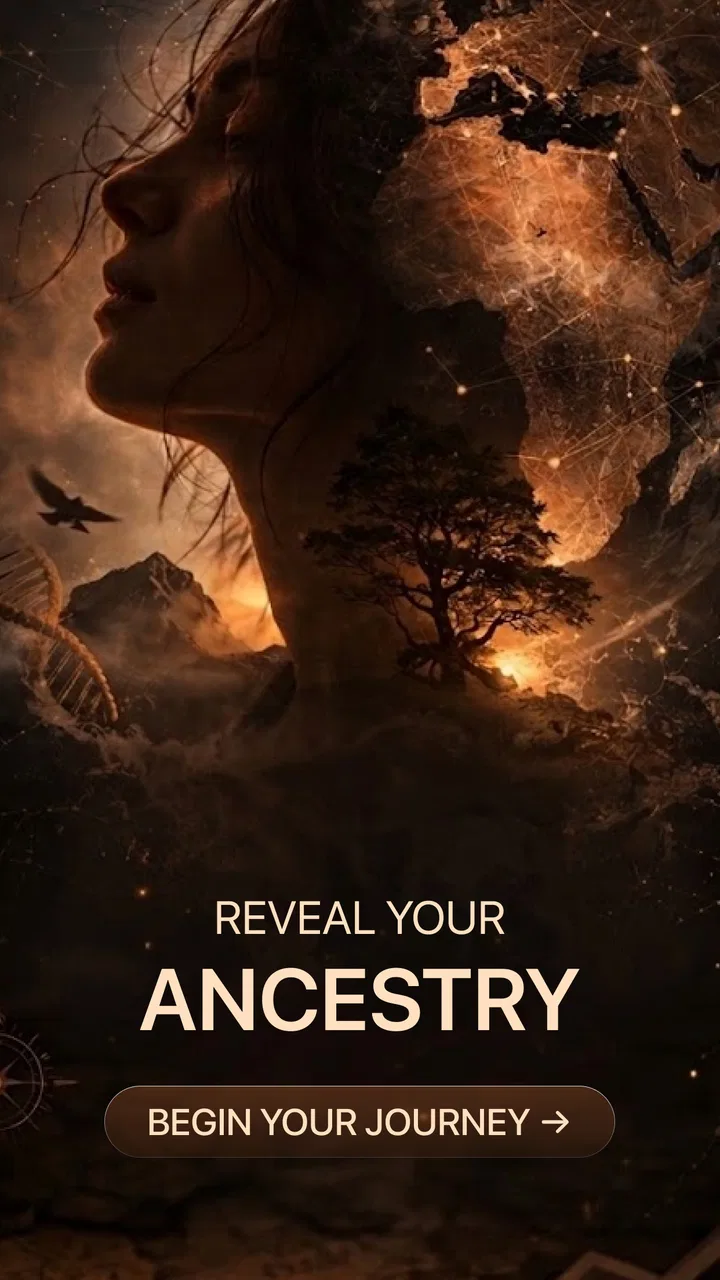
Heritage: Ancestry & Ethnicity
- 4.5
- Rating
- 10.00K
- Installs
- Free
- Price

 Analysis by App-foxy
I approached Heritage: Ancestry & Ethnicity as a light, curiosity-driven lifestyle app rather than a serious genealogy service. Its central idea is simple: take one selfie and receive an AI-generated ethnicity impression, a past-life reading, and a soulmate sketch. That combination makes it immediately approachable, especially for someone who wants a quick conversation starter instead of a long family-history project.
My overall view is positive but measured. The app is enjoyable when I treat its results as imaginative entertainment, and the selfie-based format removes the effort normally associated with ancestry research. At the same time, the presentation can feel more authoritative than the underlying method deserves. If you want documented family history, genetic analysis, or properly sourced genealogy, this is not the tool I would choose. If you want a playful personal reading to discuss with friends, it has a clear place.
What the selfie experience actually offers
The first strength is the low barrier to entry. Heritage: Ancestry & Ethnicity is a free lifestyle app from Denali Digital, and its main interaction is built around a single photograph rather than a questionnaire, archive search, or family-tree setup. That makes it easy to try during a quiet moment, while travelling, or when friends are comparing novelty apps together.
You May Also Like

 AccuWeather: Weather Radar
AccuWeather Review: A Quick, Clear Forecast for Everyday Decisions
For everyday plans, the best forecast is the one you can understand quickly. AccuWeather makes rain timing, radar, and local conditions easy to act on, with a few trade-offs.

 Hill Climb Racing
Why Hill Climb Racing Still Turns Crashes Into One More Run
A tiny car, a bumpy hill and one more upgrade: Hill Climb Racing keeps resurfacing because its simple chaos makes every near-miss feel personal.

 AliExpress - Shopping App
AliExpress Makes Global Shopping Feel Personal, but Shoppers Bear the Risk
AliExpress turns a global marketplace into a pocket-sized discovery engine. Its reach is useful, its shopping loop compelling, and its trade-offs easy to miss.

 Lords Mobile: Kingdom Wars
Lords Mobile Is a Kingdom-Building Routine, Not a Quick Match
A case-by-case verdict on the building, battles, device demands, and social commitments that make Lords Mobile rewarding for some players and exhausting for others.

 PDF Scanner app - TapScanner
TapScanner Makes Paperwork Easier to Capture, Check, and Share
TapScanner makes scanning with a phone feel less like a rescue operation and more like a dependable step in getting work done. Its capture tools are useful, though not flawless.

 Block Blast!
 Shows How Much a Puzzle Game Can Leave Out
A quiet grid game shows why puzzle players increasingly value instant clarity, repeatable skill and low-pressure play—and where the genre still needs to catch up.
More From Our News Desk
View All News


Using one selfie also shapes the experience in an important way: the result feels personal almost immediately. A photo gives the app something concrete to work from, so the process feels more engaging than tapping through generic personality questions. I found that this is the main reason the app holds attention. The appeal is not the amount of research involved; it is the quick transformation of an ordinary portrait into a themed interpretation.
The ethnicity element is likely to attract the most attention, but I would be careful about how I interpret it. An AI-generated impression based on appearance is not the same as a DNA test, a historical record, or a conversation with relatives. Facial features cannot reliably establish a person’s ancestry. For that reason, I see this part as a visual prompt for curiosity, not evidence about family origins.
The past-life reading serves a different purpose. It moves the app away from ancestry research and toward reflective entertainment. Someone might enjoy reading the result and asking whether any description matches their personality, interests, or recurring feelings. I would not use it to make decisions, explain mental-health concerns, or define personal identity. Its value is in the story it encourages you to consider, not in factual accuracy.
The soulmate sketch adds another playful layer. It can be fun for users who enjoy romantic predictions or want a shareable image to discuss with friends. The important trade-off is that the sketch should be understood as a creative output, not a dependable portrait of a future partner. That distinction matters because the app combines several emotionally loaded ideas—heritage, past lives, and romance—in one streamlined experience.
Why the format works for casual use
In my experience, the strongest use case is a short social session. Imagine sitting with a friend after dinner, each person choosing a clear selfie and comparing the different readings. The app gives you something specific to react to, which is more engaging than simply scrolling through a feed. One person may focus on the ethnicity result, another on the past-life description, while someone else may be most interested in the soulmate sketch.
A second useful scenario is personal journaling. I would save the result, read it without taking every line literally, and note which parts feel familiar or surprising. That turns the app into a prompt for self-reflection rather than a supposed diagnostic tool. It can help someone think about family stories, cultural interests, or romantic expectations, provided the user keeps a clear boundary between imagination and proof.
There is also a practical advantage for people who dislike complicated apps. Traditional genealogy platforms often ask users to build a family tree, search records, contact relatives, or upload documents. Those tools are much better for research, but they demand patience. Heritage takes the opposite approach: it offers an immediate result with almost no preparation. That makes it suitable for a quick experiment, though the convenience comes at the cost of depth.
The app’s public reception suggests that this quick format is connecting with users. It carries a 4.5 average from around 4.7 thousand ratings, with over 10 thousand installs. I read those figures as evidence of interest in the concept, not proof that its interpretations are scientifically dependable. The distinction is worth keeping in mind before sharing a result with family or treating it as a discovery.
Small workflow choices that improve the result
Although the app is designed around one selfie, the choice of that selfie still matters for the experience. I would use a recent, well-lit front-facing image with one person clearly visible and minimal obstruction from sunglasses, hats, heavy shadows, or extreme angles. This does not turn the output into a scientific assessment, but it should make the visual input more consistent and reduce the chance that the result feels distracted by the photograph itself.
I would also avoid using a group photo. Even if an app accepts it, a single subject keeps the activity focused and makes the final reading easier to understand. For a social comparison, I would ask everyone to use similar types of images—ordinary portraits rather than highly edited pictures—so the conversation is about the readings instead of differences in filters and lighting.
One non-obvious advantage is that the same selfie can be treated as a baseline for a later comparison. If you try the app again with a different image, I would not interpret changes as meaningful changes in ancestry or personality. Instead, I would use them to see how strongly the presentation depends on the photo itself. That is a useful reminder of the app’s entertainment nature and can make the experience more thoughtful.
Another tip is to separate the three outputs mentally. The ethnicity impression invites questions about family background, the past-life reading invites imaginative reflection, and the soulmate sketch is mainly a romantic novelty. Combining them into one grand conclusion would make the app seem more reliable than it is. Reading each result as a different kind of creative prompt produces a more balanced experience.
The main weakness is the gap between appearance and authority
The most meaningful limitation is not the selfie process itself; it is the risk that users may confuse an attractive presentation with evidence. The word “ethnicity” can sound precise, especially when it appears beside ancestry-related language. Yet a photograph cannot establish someone’s genetic background or verify a family story. Users who are genuinely investigating their roots should begin with relatives, documents, archives, or a reputable DNA service rather than an AI portrait interpretation.
This issue becomes more sensitive when the result touches identity. A playful reading can still affect how someone thinks about their appearance or cultural belonging. I would be especially cautious with children and with anyone who already feels uncertain about their heritage. The Everyone age rating makes the app broadly accessible, but broad accessibility does not mean every result will feel harmless to every person.
Privacy is another point I would consider before uploading a selfie. A face is personal information, and users should pause to review the app’s own permission and privacy explanations before proceeding. I would not upload another person’s photograph without their consent, and I would avoid using images that reveal private documents, locations, or other people in the background. These are sensible precautions for any photo-based service, but they matter more when the app analyzes a recognizable face.
The free entry point is helpful, but the presence of in-app purchases changes how I would approach the experience. The listed purchase range runs from $6.99 to $39.99 per item, so I would explore the free portion first and decide whether the experience offers enough value before paying for anything. Users should also pay attention to the purchase screen and the wording around any premium result. A novelty reading can be enjoyable, but it is easy to spend more than intended when the outputs are framed as personal or emotionally significant.
For that reason, I would not recommend the app to someone looking for a one-time, evidence-based answer about ancestry. A genealogy service is the better option for family records, while a DNA-testing provider is more appropriate for genetic estimates. A relationship-focused app may be more useful for meeting people or learning communication preferences. Heritage is strongest precisely where those alternatives are weakest: it delivers a fast, visual, imaginative experience without asking the user to build a research project.
Who will enjoy it, and who should skip it
I think the ideal user is curious, comfortable with entertainment-oriented AI, and able to keep a result in perspective. If you enjoy personality quizzes, visual generators, fortune-style readings, or sharing unusual app results with friends, the combination here is likely to feel appealing. The app is also a good fit for someone who wants a gentle prompt to think about family identity or romantic ideals without committing to a large platform.
It can work well for a casual gathering because the selfie requirement is easy to explain and the outputs create natural conversation. I would suggest agreeing in advance that nobody treats another person’s result as a judgment about their looks, culture, or relationships. That simple boundary keeps the activity playful rather than uncomfortable.
I would skip it if you need documented ancestry, medical information, legal identity evidence, or a dependable prediction about a future partner. I would also avoid it if you are uncomfortable submitting a face photo to an AI-based service or if paid upgrades would be difficult to resist. In those situations, the app’s convenience is not enough to offset the uncertainty and potential cost.
Device compatibility is relatively forgiving: the current version is 1.0.11 and requires Android 7.0 or later. That makes it accessible on many older Android phones, although the quality of the experience will still depend on the camera, lighting, and general performance of the device. The app is free to install, but I would treat that as an invitation to sample it, not as a promise that every result or option will remain free.
My verdict after weighing the fun against the limits
Heritage: Ancestry & Ethnicity succeeds because it turns a familiar selfie into several different kinds of personal content. The ethnicity interpretation creates curiosity, the past-life reading adds a reflective angle, and the soulmate sketch gives the experience a visual, shareable finish. Denali Digital has chosen a format that is easy to understand and quick to try, which explains why it feels more approachable than conventional ancestry tools.
My recommendation comes with one firm condition: use it as entertainment, never as proof of identity or heritage. With that mindset, it can be a pleasant way to spend a few minutes, start a conversation, or explore how an AI-generated story makes you think about yourself. The most rewarding approach is to question the result, compare it with your own knowledge, and enjoy the creative parts without surrendering your judgment.
The app is not the right replacement for genealogy research, DNA analysis, or a serious relationship service. It is a lighter product with a narrower promise, and its paid items make a little financial caution sensible. Still, for users who want a free starting point for a playful selfie experiment and understand the difference between imaginative output and verified information, Heritage: Ancestry & Ethnicity is worth trying.
FAQs for Heritage: Ancestry & Ethnicity
01What is Heritage: Ancestry & Ethnicity used for?
Heritage: Ancestry & Ethnicity is designed to help users explore their family background and learn more about possible ancestral origins. Depending on the available features, you may be able to build a family tree, organize relatives, research historical records, and view ethnicity-related information. It is best treated as a starting point for personal research rather than a definitive explanation of your identity.
02Does Heritage: Ancestry & Ethnicity require a DNA test?
Not necessarily. The app may provide genealogy tools and ancestry research features that work with information you enter yourself, such as names, dates, locations, and family relationships. If DNA-related services or ethnicity estimates are offered, they may require a separate test, compatible service, or account. Check the app’s current description and terms before assuming that DNA analysis is included with the download.
03Are the ethnicity and ancestry results completely accurate?
Ethnicity estimates and ancestry suggestions should be viewed as approximations. Results can vary according to the database, reference populations, information supplied, and algorithms used by the service. Historical records may also contain errors or incomplete details. For important family-history conclusions, compare the app’s findings with official documents, trusted genealogy sources, and information from relatives rather than relying on one result alone.
04Is my personal and family information safe in the app?
Before creating an account or entering family details, review the application’s privacy policy, permissions, and data-sharing practices. Genealogy information can include names, birthdays, locations, photographs, and details about living relatives, so it deserves careful handling. Use a strong, unique password, avoid adding sensitive information unnecessarily, and check whether your data can be deleted or exported if you stop using the service.
05Is Heritage: Ancestry & Ethnicity free to download and use?
The app may be free to install while placing some tools, records, reports, or advanced research features behind subscriptions or in-app purchases. Pricing, trial periods, and available features can change by country and platform. Read the purchase screen carefully before starting a trial, especially its renewal terms, and confirm whether cancellation must be completed through the Google Play Store or Apple App Store.
Pros
- Simple interface makes ancestry research approachable for beginners.
- Ethnicity results are presented with clear visual breakdowns.
- Useful for organizing family discoveries in one place.
- Can help identify possible relatives and family connections.
- Convenient access to research tools from a mobile device.
Cons
- Some records and advanced features may require a paid subscription.
- Ethnicity estimates can change as the reference database is updated.
- Results may be limited for families from underrepresented regions.
- Privacy concerns may arise when uploading genetic or family data.
- Research quality depends heavily on the accuracy of available records.

Heritage: Ancestry & Ethnicity
Gallery